|
|
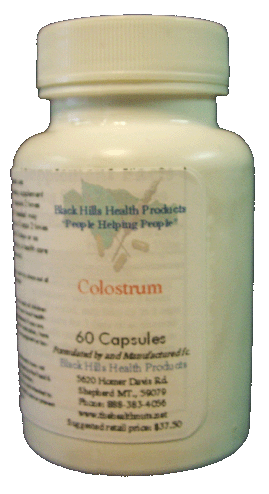 |
COLOSTRUM
 |
| Fat |
0.6 g |
Supports the Immune System
Supports the body's renewal process
100% first-milking colostrum |
| Vitamin A |
654 I.U. |
| Vitamin C |
7.5 mg |
| Calcium |
44 mg |
| Bovine Colostrum |
1500 mg |
|
| Colostrum is the first mammary secretion that every mammal gives its newborn. It is produced by the mother for only a short period of time before milk is produced. It contains numerous compounds which affect more than 50 processes in the body, ranging from immunity to regeneration and growth of all types of cells. For years, the western world has ignored the powerful influence of nature's first food. However, recent study has shown it to be extremely beneficial, not only for the newborn, but for animals and humans of all ages. |
|
|
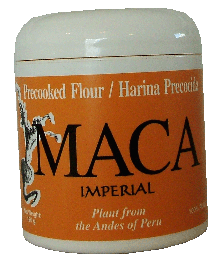 |
MACA
|
| Protein |
11.76 g |
|
Carbohydrates |
68.15 g |
| Fiber |
5.19 g |
Mineral Salts |
4.02 g |
| Humidity |
9.89 g |
Fat |
0.99 g |
| Potassium |
1,650 mg |
Phosphorus |
351 mg |
| Calcium |
366 mg |
Sulfur |
309 mg |
|
| Peruvian MACA is a powerful adaptogenic herb proven to supply 60 phyto-chemicals necessary to bring optimum-nutrition and sustainable energy to the human body. Whether you are just looking for more energy and stamina or you are battling menopausal symptoms like hot flashes, mood swings, vaginal dryness etc….MACA has something beneficial for you. |
|
|
|
|
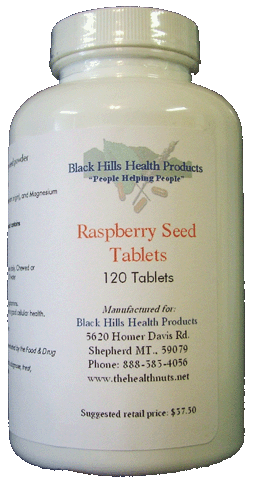
ELLAGIC ACID |
| WHAT IS ELLAGIC ACID? |
| Ellagic Acid may be one of the most potent ways to fight cancer. Ellagic Acid, a phenolic compound, is a proven anti-carcinogen, and anti-cancer initiator! |
| The Hollings Cancer Institute at the University of South Carolina is doing a double blind study on a large group of 500 cervical cancer patients that has everyone excited. |
| They are excited because their past nine years of study have shown that a natural product called ellagic acid is causing G-arrest within 48 hours (inhibiting and stopping mitosis-cancer cell division), and apoptosis (normal cell death) with 72 hours, for breast, pancreas, esophageal, skin, colon and prostate cancer cells. |
| Clinical tests also show that ellagic acid prevents the destruction of the p53 gene by cancer cells. |
| Additional studies suggest that one of the mechanisms by which ellagic acid inhibits mutagenesis and carcinogenesis is by forming adducts with DNA, thus masking binding sites to be occupied by the mutagen or carcinogen. |
| Ellagic acid can be found in different foods, but the clinic has identified the red raspberry as having the highest content of the acid. |
| Ellagic acid is a naturally occurring phenolic constituent in certain fruits and nuts. Research in the past decade confirms that ellagic acid markedly inhibits the ability of other chemicals to cause mutations in bacteria. Ellagic acid from red raspberries has proven as an effective antimutagen and anticarcinogen as well as a inhibitor of cancer. |
| Dr Daniel Nixon, MUSC, began studying the ellagic acid in red raspberries in 1993. |
His recently published results show:
- Cervical cancer cells - HPV (human papilloma virus) exposed to ellagic acid from red raspberries experienced apoptosis (normal cell death).
- Ellagic acid leads to G1 arrest of cancer cells, thus inhibiting and stopping mitosis (cancer cell division).
- Ellagic acid from red
- raspberries prevents destruction of the P53 gene by cancer cells. P53 is regarded as the safeguard of mutagenic activity in cervical cells.
- Tests reveal similar results for breast, pancreas, esophageal, skin, colon and prostate cancer cells.
- Consuming one cup (150 grams) of red raspberries per day prevents the development of cancer cells.
|
These statements have not been evaluated by the food and rug administration.
The products are not intended to diagnose, treat, care or prevent any disease. |
|
Mineral Waters
|
Black Hills Health Products
7216 Lola Dr.
Black Hawk, SD 57718
Toll free (888) 383-4056
Office(605) 787-6253
Fax (605) 787-6267
|
 |
|
|
|